
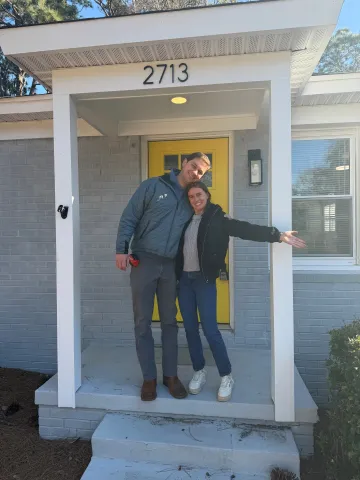
Buying your first home can feel like learning a new language while making one of the biggest financial decisions of your life. There are mortgage terms to understand, homes to compare, documents to review and several different professionals involved along the way.
You don’t need to know everything before you start. What helps is understanding what happens next, what decisions you’ll need to make and when you may need money available throughout the process.
This first-time homebuyer guide walks through the journey from preparing your finances to closing on your home. The overall buying process is similar across the country, but some important details depend on where you live. For buyers in North Carolina, that includes understanding the state’s due diligence process, researching local homebuyer resources and knowing that some parts of the transaction may work differently than what you see described in national homebuying guides.
Here’s the process at a glance:
- Make sure you’re financially ready to buy.
- Determine your homebuying budget.
- Estimate how much cash you’ll need and when you’ll need it.
- Get pre-approved for a mortgage.
- Explore mortgage options and first-time buyer programs.
- Find a real estate agent and start house hunting.
- Make an offer.
- Complete the home inspection and appraisal.
- Finalize your mortgage.
- Review your final documents and close.
Let’s walk through what happens at each stage and what first time homebuyers should pay particular attention to along the way.
Step 1: Make Sure You’re Financially Ready to Buy a Home
Financial readiness involves more than being able to qualify for a mortgage. Before looking at homes, take a broader look at your income, existing debt, credit, savings and other financial priorities.
Consider whether your income is stable, how much room you have in your monthly budget and what your savings would look like after purchasing a home. Homeownership can introduce expenses that renters may not currently have, including repairs, maintenance, property taxes, homeowners insurance and potentially HOA dues.
This is also a good time to think about what else your money needs to accomplish. Buying a home doesn’t make retirement savings, emergency expenses, childcare, transportation or other financial goals disappear.
A mortgage lender can help determine what financing you may qualify for. Your job is also to determine what level of homeownership expense fits your life comfortably.
Review your credit before applying
Your credit score and overall credit history can affect mortgage eligibility, interest rates and other loan terms. There isn’t one universal credit score required to buy a house because requirements vary among mortgage lenders and mortgage programs.
A higher credit score may provide access to different financing opportunities or more favorable terms. Reviewing your credit early also gives you time to identify potential issues before you’re ready to make an offer.
If your credit needs attention, Allegacy’s credit education resources can help you understand the factors that affect credit and steps you can take to strengthen your financial profile before applying for a mortgage.
Look at debt through two different lenses
Mortgage lenders may evaluate your debt to income ratio, or DTI, as part of the qualification process. DTI generally compares qualifying monthly debt obligations with your gross monthly income.
That calculation matters, but it shouldn’t be the only way you evaluate affordability.
A lender is determining whether you meet its requirements for financing. You’re deciding whether the resulting monthly payment leaves enough room for groceries, transportation, savings, childcare, travel and everything else that makes up your actual budget.
Those numbers can lead to different conclusions, which is why the next step should happen before serious house hunting begins.
Step 2: Build a Homebuying Budget, Not Just a Home Price
It’s tempting to reduce affordability to one number: “How much house can I afford?”
But a $300,000 home, for example, doesn’t simply cost $300,000 divided into monthly payments. The purchase price is only the starting point.
Your monthly mortgage payment may include principal and interest as well as amounts for property taxes and homeowners insurance when those expenses are escrowed. Mortgage insurance may apply depending on your financing. HOA dues, utilities, repairs and maintenance can add to the ongoing cost of owning the property.
A more useful homebuying budget considers five things:
- The purchase price
- Your expected monthly mortgage payment
- Your total monthly housing expenses
- The upfront cash required to buy
- The ongoing costs of maintaining the home
This distinction is particularly important when comparing homes in different North Carolina communities. Property taxes, HOA costs, insurance expenses and other ownership costs can vary by location and property, so two similarly priced homes won’t necessarily have the same impact on your budget.
You may also qualify to borrow more than you personally feel comfortable spending. Treat potential mortgage qualification as information, not automatically as your spending target.
Put your own numbers to the test
Once you understand the pieces of a homebuying budget, Allegacy’s Home Affordability Calculator can help you test different scenarios using your own numbers.
For example, you can explore how changing the purchase price or down payment affects the picture rather than relying on a generic rule about how much house someone with your income “should” buy.
That makes a calculator most useful as a planning tool rather than a substitute for a thoughtful budget. If you need to go deeper, Allegacy’s home affordability education can help you work through the factors that determine a comfortable housing budget.
Step 3: Plan for When You’ll Actually Need Cash
First time buyers often hear about saving for a down payment. What can be less obvious is that buying a home may require money at several different points in the process.
Depending on your transaction, potential expenses include:
- Down payment
- Closing costs
- Earnest money deposit
- Home inspection
- Appraisal-related expenses, where applicable
- Moving expenses
- Immediate repairs or purchases
- State- or transaction-specific costs
The amount of money you’ll need depends on your purchase price, financing, location and individual transaction. Just as importantly, you may not pay all of those expenses at the same time.
A simple cash-flow timeline for first-time buyers
Think about your homebuying savings in stages.
Before house hunting: You’ll want to understand how much cash you have available for the purchase while considering how much you want to retain in savings afterward.
When you make an offer: An earnest money deposit may come into play. North Carolina buyers may also encounter a due diligence fee, which is distinct from earnest money and deserves particular attention before signing a contract.
After an offer is accepted: You may pay for a home inspection and potentially other property-related services or expenses.
As closing approaches: Your lender and closing documents will identify the cash needed to close, which can include your down payment and closing costs.
After you get the keys: Moving, utility setup, furnishings, maintenance and immediate repairs can create expenses almost immediately.
Thinking about your cash this way can help prevent a common mistake: treating every dollar you've saved as available for the down payment.
You may not need 20% down
First time homebuyers don’t necessarily need a 20% down payment.
Requirements vary based on the loan type, lender and borrower circumstances. Some mortgage options allow qualified borrowers to purchase with less than 20% down, while certain programs provide no down payment options to eligible borrowers.
The amount you put down can affect your loan balance, monthly payment, mortgage insurance requirements and how much cash you have left after closing.
Instead of beginning with the assumption that 20% is the goal, compare the requirements and tradeoffs of financing options available to you.
Step 4: Get Pre-Approved Before Serious House Hunting
Once you have a preliminary budget, mortgage pre-approval can help turn your planning into a more concrete picture of potential financing.
During pre-approval, a mortgage lender reviews financial information to determine the financing for which you may potentially qualify, subject to its process and requirements. Documentation, terminology and procedures can vary between mortgage lenders.
Getting pre-approved before serious house hunting can help you establish a more informed shopping range and identify potential financing issues earlier. Pre-approval may also demonstrate financing preparedness when submitting an offer, although expectations vary by seller and local housing market.
This is also a useful point to begin a conversation with a loan officer. Instead of trying to understand every mortgage option on your own, you can ask about documentation requirements, loan terms, potential next steps and the financing options that may be available.
Buyers who are ready to reach this stage can explore Allegacy’s mortgage pre-approval resources or connect with an Allegacy Mortgage Loan Advisor to learn more about the process.
Just remember that pre-approval isn’t the finish line. It isn’t final loan approval, and both your finances and the property may still need to meet lender requirements before closing.
Step 5: Understand the Mortgage Options You May Encounter
There isn’t one “first-time homebuyer mortgage.” First time buyers may encounter several types of financing, each with different eligibility requirements, costs and features.
You don’t need to become an expert on every loan type before buying. You should understand the major categories well enough to know what questions to ask.
Conventional loans
Conventional loans aren’t insured or guaranteed by a federal government agency. Requirements vary by mortgage program, lender and borrower.
You may encounter broad statements online that conventional loans typically require a particular credit score or down payment. Actual requirements can vary, so it’s more useful to evaluate the financing available based on your circumstances.
FHA loans
FHA loans are mortgages insured by the Federal Housing Administration. They may provide another financing path for eligible borrowers, including some first time homebuyers. Program requirements, mortgage insurance and other costs apply.
VA loans
VA loans are backed by the U.S. Department of Veterans Affairs and are available to eligible borrowers who meet applicable requirements. Certain eligible borrowers may have access to no down payment options.
USDA loans
USDA loans may be available to eligible borrowers purchasing qualifying properties in eligible areas. Because property location can affect eligibility, this is one option some buyers outside major urban areas may want to research.
Compare more than the down payment
A low down payment can be appealing, but it’s only one part of a mortgage.
Compare interest rates, mortgage insurance, fees, loan terms and the resulting monthly payment. A loan that requires less cash upfront isn't automatically less expensive overall, just as a larger down payment isn't automatically the right choice for every household.
Allegacy’s current Home Loans resources can help buyers explore the mortgage options the credit union offers. Product eligibility, rates, costs and requirements should always be confirmed based on current information and the borrower’s circumstances.
Look beyond the mortgage for first-time buyer resources
Some buyers may also qualify for assistance programs separate from their primary mortgage.
Depending on where you live and your circumstances, resources may be available through state housing agencies, local programs or another government agency. Eligibility can depend on income, location, purchase price and other program-specific requirements.
For North Carolina buyers, the North Carolina Housing Finance Agency is an especially relevant resource to include in your research. It provides information about current homebuyer programs available in the state. Program availability and eligibility can change, so verify current requirements rather than assuming that first-time buyer status automatically qualifies you.
Step 6: Find a Real Estate Agent and Start House Hunting
Once your budget and financing preparation are underway, house hunting can begin.
Real estate websites are useful for researching neighborhoods, following listings and getting a sense of your local housing market. They can also make it surprisingly easy to focus almost entirely on purchase price.
Try to evaluate each property through the budget you established earlier.
Consider:
- Location and commute
- Property condition
- Property taxes
- Homeowners insurance
- HOA fees
- Utilities
- Maintenance needs
- Space and layout
- Potential future needs
A buyer’s real estate agent can help you navigate available properties and different parts of the transaction. That role becomes increasingly important as you move from casually browsing homes to considering an actual offer.
Pay attention to the local market, not just national headlines
National housing trends can provide context, but buying a home is ultimately a local decision.
Conditions can differ significantly between North Carolina markets and even between communities within the same region. Inventory, property characteristics, taxes, HOA prevalence, insurance considerations and competition among buyers can all vary.
That’s one reason a national headline about whether it’s a “good” or “bad” time to buy can only tell you so much. Your finances, the homes available in the areas you’re considering and the local housing market matter more to your individual search.
There also isn’t one standard amount of time it takes to buy a house. Some buyers find a home quickly, while others search for months. Once you have an accepted offer, inspections, appraisal, financing and closing requirements can add additional time.
Step 7: Make an Offer and Understand What You’re Committing To
Finding the home can feel like the biggest hurdle, but an offer introduces a new set of decisions.
Your real estate agent can help you prepare an offer based on the property, transaction and local practices. An offer may address the purchase price, financing, proposed closing timeline, earnest money deposit and other contractual terms or contingencies where applicable.
An earnest money deposit generally demonstrates a buyer’s intent to proceed with the transaction under the purchase agreement. How that money is handled depends on the contract and applicable state practices.
An accepted offer also doesn’t mean the home is officially yours. Financing, inspection findings, appraisal, title or closing requirements and other contractual conditions may still affect the transaction.
For first-time buyers, this is an important shift in the process. You’re no longer simply comparing properties and mortgage possibilities. You’re entering into a transaction with contractual deadlines and potentially significant financial commitments.
Buying in North Carolina? Due diligence deserves extra attention
This is one area where a generic national first-time homebuyer guide may not adequately prepare someone buying in North Carolina.
North Carolina residential transactions may involve both an earnest money deposit and a separate due diligence fee. A purchase contract may also establish a due diligence period during which the buyer can investigate the property and transaction.
Earnest money and the due diligence fee are not the same thing, and the rules governing how funds are handled can depend on the contract and circumstances.
That makes it particularly important for North Carolina first time buyers to understand:
- What each payment represents
- When each payment is due
- The due diligence period and its deadlines
- What investigations or decisions may need to occur during that period
- The contractual circumstances affecting whether money may be recoverable
Don't rely solely on a national article to understand this part of an NC home purchase. Review current North Carolina information and make sure your real estate or appropriate legal professional explains the terms of the actual contract before you sign it.
Step 8: Use the Inspection and Appraisal for What They’re Designed to Do
Once an offer is accepted, attention shifts from finding a home to learning more about the property and completing the requirements needed to move the transaction forward.
Two major steps during this stage are the home inspection and appraisal. They’re sometimes grouped together, but they answer different questions.
Home inspection: What condition is the property in?
A home inspection generally evaluates the physical condition of the property. An inspector may examine major components and systems and identify observed issues that buyers may want to understand.
The inspector works for the buyer under the terms of the inspection engagement, not for the mortgage lender.
An inspection isn't a guarantee that a home has no problems. It provides additional information about the property's observed condition so you can better understand what you're purchasing.
Appraisal: What is the property worth for the mortgage transaction?
An appraisal generally helps the mortgage lender evaluate the property’s value in connection with the financing.
That makes its purpose different from the inspection. The inspection is primarily concerned with condition. The appraisal is primarily concerned with value for the mortgage transaction.
If an appraisal-related issue arises, the next steps depend on the financing, contract and circumstances involved.
Step 9: Keep Your Mortgage on Track After the Offer
Pre-approval happened before you found the house. Now the lender has an actual property and transaction to evaluate.
Depending on your lender and mortgage, this stage may involve:
- Providing updated or additional financial documents
- Underwriting
- Completing the appraisal
- Verifying financial information
- Resolving outstanding conditions
- Receiving final loan approval
Stay responsive to your loan officer during this stage. A request for another document doesn't necessarily mean something has gone wrong. Mortgage underwriting can involve verifying or updating information before the loan is finalized.
It's also wise to be mindful of significant changes to your finances before closing. Taking on substantial new debt or making other major financial changes could potentially affect mortgage qualification.
If you're considering financing a vehicle, opening significant new credit or making another major financial move while your mortgage is being finalized, contact your lender early to understand whether it could affect your application.
Step 10: Know What You’re Signing Before You Get the Keys
The final stage brings together the financial and legal pieces of the transaction.
For mortgages subject to applicable federal disclosure requirements, the Closing Disclosure provides information about your final loan terms, projected payments, closing costs and other details.
Review those documents carefully rather than treating closing as a formality.
Pay particular attention to:
- Loan amount and interest rate
- Monthly mortgage payment
- Estimated property taxes and insurance
- Mortgage insurance, if applicable
- Closing costs
- Cash needed to close
- Other loan terms and transaction details
If something doesn't match what you expected, ask about it before signing.
The final walkthrough
Shortly before closing, buyers may also complete a final walkthrough.
The final walkthrough isn't another home inspection. Its purpose and timing depend on the transaction and contract, but it generally provides an opportunity to see the property again shortly before closing.
Closing procedures themselves vary by state and transaction. Generally, final documents are signed, required funds are handled and the transaction moves toward completion. Once applicable requirements have been satisfied, ownership can transfer and you can receive the keys.
First-Time Homebuyer Mistakes That Can Affect More Than the Purchase
First time buyers don't need to navigate the process perfectly. But some decisions can have consequences beyond a single step.
Shopping at the top of your potential approval range
The amount a lender may allow you to borrow isn't necessarily the amount that best fits your budget. Start with your finances and use the approval range as one piece of information.
Planning only for the down payment
Closing costs, earnest money, inspections, moving expenses and immediate homeownership costs can all require cash. Think about when money changes hands throughout the process, not just how much you need at closing.
Assuming 20% down is always required
Mortgage requirements vary. Explore the financing for which you may qualify before deciding that a particular down payment is necessary.
Focusing only on the mortgage payment
Property taxes, homeowners insurance, mortgage insurance, HOA dues, maintenance and utilities can change the true monthly cost of a home.
Treating pre-approval as final approval
Your mortgage still has to move through the remaining lender requirements after your offer is accepted.
Making major financial changes before closing
Taking on substantial new debt or making other significant changes to your finances could affect mortgage qualification. Ask your lender about potential implications before making a major move.
Applying generic homebuying advice to a North Carolina contract
National resources can help you understand the overall process, but state-specific practices matter once you're entering an actual transaction. North Carolina buyers should pay particular attention to due diligence, earnest money and contractual deadlines.
Staying quiet when something doesn't make sense
You’ll work with people who handle home purchases every day. You probably don’t.
Your real estate agent, mortgage lender, loan officer, inspector, appraiser and closing professionals have different responsibilities. If you don't understand an expense, deadline, document or next step, ask the appropriate professional to explain it before you move forward.
Your First-Time Homebuyer Roadmap
When the process starts to feel complicated, return to the sequence:
- Review your credit, income, debt and savings.
- Establish a realistic homebuying budget.
- Estimate your down payment and other upfront cash needs.
- Understand when you may need money throughout the transaction.
- Research mortgage and assistance options that may apply.
- Seek mortgage pre-approval when appropriate.
- Choose a real estate professional.
- Start house hunting within your established budget.
- Understand the offer and financial commitments before signing.
- For North Carolina purchases, understand due diligence and earnest money.
- Complete applicable inspections and appraisal.
- Respond promptly to mortgage documentation requests.
- Review final loan and closing documents.
- Complete your final walkthrough when applicable.
- Prepare for closing.
Make Allegacy Part of Your Homebuying Toolkit
You don't need every answer on day one. What matters is knowing what comes next and having the right resources available when you reach each decision.
If you're still establishing your budget, Allegacy's home affordability education and Home Affordability Calculator can help you explore the numbers.
When you're ready to move from estimating to exploring financing, Allegacy's mortgage resources can help you learn about current Home Loan options and the pre-approval process. North Carolina buyers can also research current state-level resources, including programs available through the North Carolina Housing Finance Agency.
And when you're ready to discuss potential mortgage options, an Allegacy Mortgage Loan Advisor can help explain the mortgage process and answer questions about available financing.
Buying your first home involves a lot of moving pieces, but they don't all happen at once. Prepare your finances first, understand your budget, know when money may be required and work through the process one stage at a time.
The goal isn't simply to get the keys. It's to understand the decisions that get you there and how your first home fits into your financial life after closing.